

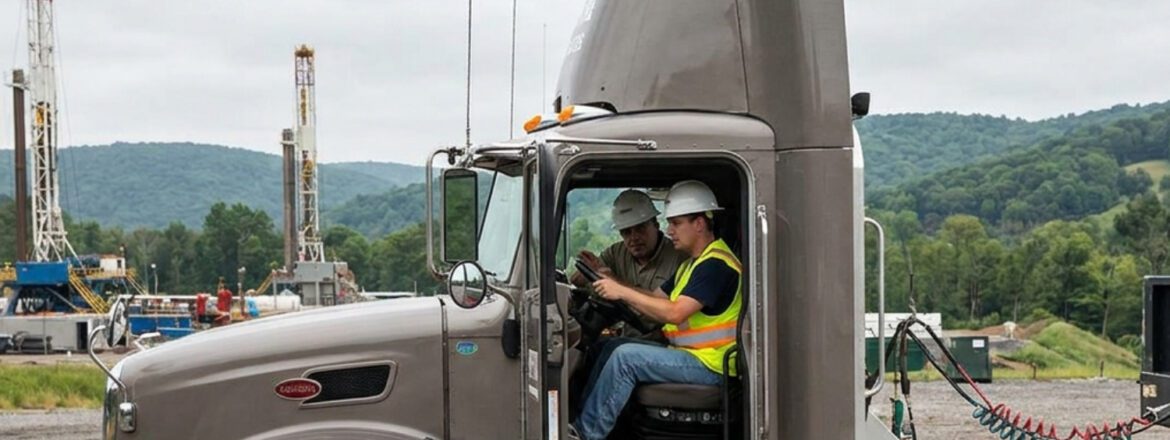
Commercial driver training changes how a driver handles the ordinary parts of the job, like the walkaround before sunrise and the merge onto a crowded interstate. A license shows that someone passed a road test. It says very little about how that person will manage a loaded truck in sleet, a tight dock, or the fourth hour of a long shift.
Ultimate Defensive Driving trains fleet drivers on their own vehicles and routes, and the same seven skills come up in nearly every program we run. Here is what they look like in practice and why insurers and safety managers care about each one.
1. Inspecting the Vehicle Before It Moves

Most roadside breakdowns start as something a driver could have seen in the yard. A slow air leak, a worn tire sidewall, or a loose mounting bracket is easy to catch with a methodical walkaround and easy to miss with a casual glance.
In training, drivers learn a fixed inspection order so nothing gets skipped, and they learn what a defect looks like on the specific vehicle they drive. A van fleet and a tractor-trailer fleet need different checklists, which is why we build the inspection routine around your equipment.
2. Managing Space Around the Vehicle
A loaded commercial vehicle needs far more room to stop than a passenger car, and many rear-end collisions come down to a following gap that was fine for a car and too short for a truck.
Drivers practice holding a longer gap, watching the lane two or three vehicles ahead, and keeping an open side to move into. They also learn where their blind spots sit on their own vehicle, since those zones differ between a box truck, a service van, and a flatbed.
3. Driving to the Conditions
Posted speed limits assume good weather and good traction. Rain, fog, snow, and wind each change braking distance and handling, and the right response is usually to slow down earlier than feels necessary.
Training covers how a vehicle behaves on wet and icy pavement, how crosswinds push on a tall trailer, and how to read cues like spray patterns and bridge deck frost. It also covers the decision that matters most, which is when to pull off and wait. Regional conditions shape this heavily, so our programs lean on local weather and road patterns. You can see the markets we cover on our regions served page.
4. Moving Slowly in Tight Spaces
A surprising share of fleet damage happens below 10 miles per hour, in lots, alleys, and loading areas. Backing is the biggest source, because a driver can only see so much in the mirrors.
Instructors teach drivers to size up the space before committing, to get out and look when the view is unclear, and to use a spotter when one is available. Repetition on a real vehicle in a real yard builds the judgment that a classroom cannot.
5. Keeping Hours and Records Straight
Drivers who cross state lines or run regulated routes answer to federal rules on driving time and rest. The Federal Motor Carrier Safety Administration publishes the requirements, and violations tend to show up in audits and insurance reviews long after the trip is over.
Good training turns that paperwork into a habit. Drivers learn what to log, when to log it, and how to plan a route around rest breaks and fuel stops so the schedule never pushes them into a bad decision. Even fleets that fall outside the federal rules benefit from the same recordkeeping, because it gives a safety manager something concrete to review.
6. Scanning for Hazards Early
Defensive driving starts with where a driver looks. Someone who watches only the bumper ahead has little time to react, while someone who scans far ahead, checks mirrors on a steady rhythm, and always has an exit in mind has several seconds of extra warning.
We teach drivers to spot early signs of trouble, such as a car drifting within its lane, a driver glancing down at a phone, or brake lights flickering several vehicles up. Those seconds are often the difference between a smooth correction and a claim.
7. Staying Alert Through a Full Shift
Fatigue and distraction are the quiet causes behind many serious crashes, and they build slowly enough that a driver may not notice. Training gives drivers language and tools for it, including how to recognize their own warning signs, how to handle phones and dispatch messages, and when a break is the safest move.
Supervisors learn it too. A fleet that treats alertness as a safety issue, and not a personal failing, tends to catch problems before they reach the road.
Getting These Skills Into Your Own Drivers
 Each of these skills improves with practice in the vehicle a driver actually uses. That is why our commercial driver training happens at your site, with instructors licensed in Pennsylvania and by the National Safety Council. We build the program around your routes and equipment, and we can license our system to your supervisors so training continues between visits.
The simplest way to see where your drivers stand is a free 48-point safety audit at your facility. Reach out through the contact page and we will schedule one.

Chief Instructor Trainer at Ultimate Defensive Driving.